Microchip
A microchip is a tiny chip, about the size of a grain of rice, that a vet places under your pet's skin. It has a number that links to your contact details through a microchip company.
- Good at: it's permanent. It can't fall off or get lost.
- Keep in mind: it doesn't track your pet's location, and someone who finds your pet on the street can't read it. It only helps once your pet is taken to a vet or shelter with a scanner, and only if your details with the microchip company are up to date.
ID tag
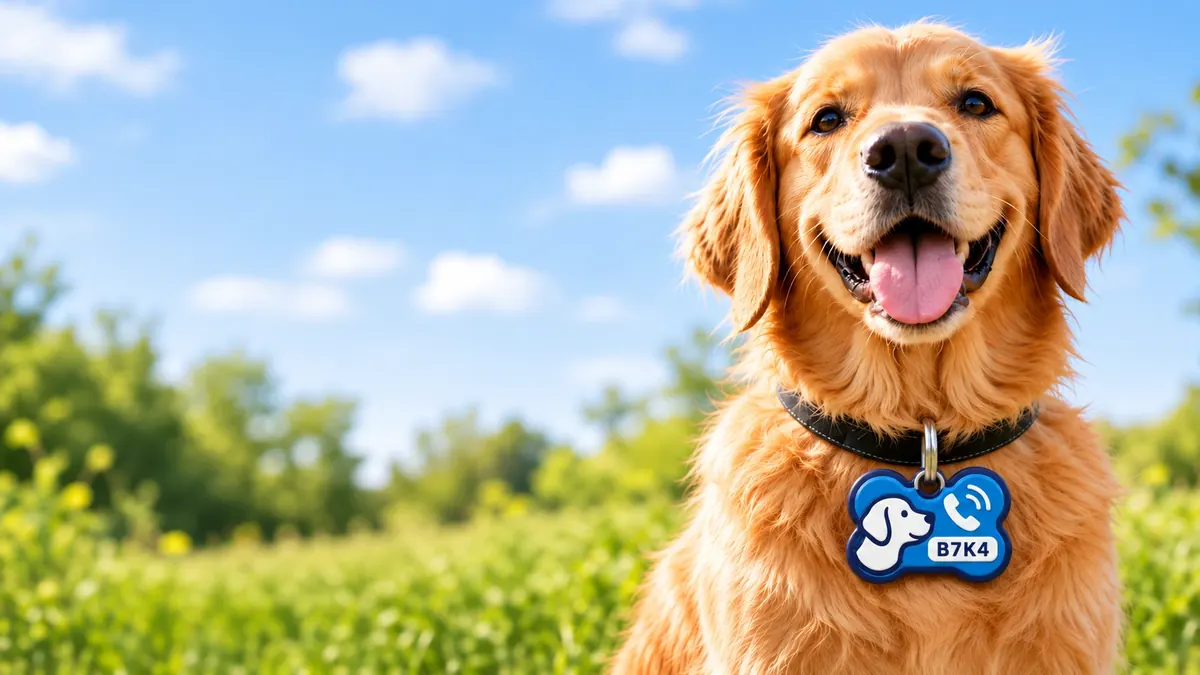
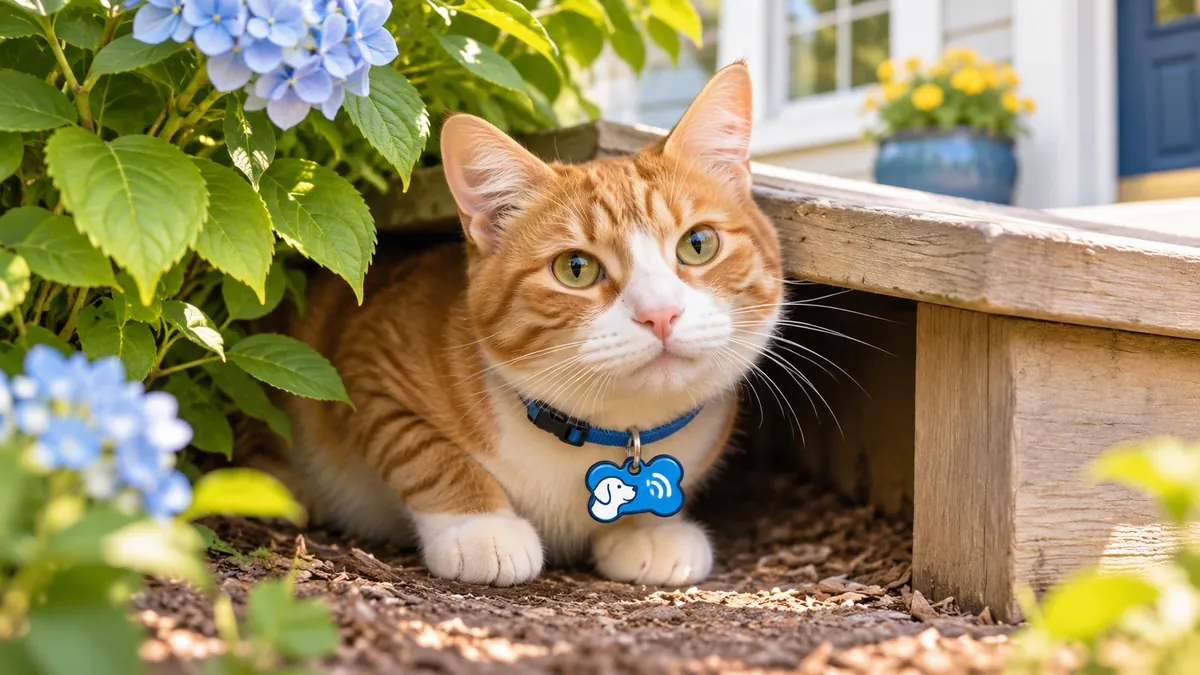
A tag on your pet's collar with a phone number on it.
- Good at: anyone who finds your pet can read it and call right away, without a trip to a vet or shelter. No battery, nothing to charge.
- Keep in mind: a tag can fall off with the collar or wear down over time. Check it now and then, and keep the number on it current. Here's what to put on a tag.
GPS tracker
A device on your pet's collar that shows its location in an app on your phone.
- Good at: showing where your pet is, so you can go there yourself.
- Keep in mind: it needs charging, and it needs signal to send its location. Many need a monthly subscription. It can also come off with the collar. And on its own, it doesn't help a stranger who finds your pet reach you.
Which should you use?
More than one. A microchip is a permanent backup if everything else comes off. A visible ID tag lets whoever finds your pet reach you right away. A GPS tracker can add live location if you want it.
Where BarkPhone fits
A BarkPhone tag is an ID tag with a live team behind the number. Whoever finds your pet calls the number on the tag, or scans it, and a BarkPhone team member answers 24/7. We reach you, then the recovery contacts you chose.
- Your own phone number isn't on the tag, and finders never see it.
- Your pet's Pet Code stays the same for life, so you can update your contacts in your account without a new tag.
- It's not a GPS tracker and not a replacement for a microchip. We recommend a microchip too.